Can I Live in a Different State Than My LLC?


Yes, you can live in a different state than your LLC. Your LLC belongs to the state where you formed it, not the state where you live. A business owner in Florida can legally own a Delaware or Wyoming LLC. However, if you run the business from your home state, that state will usually require you to register the company as a foreign LLC. You will also pay state taxes wherever the business earns income. For most small business owners, forming an LLC in their home state remains the simplest and most affordable option.
In this guide, we break down how out-of-state LLC ownership actually works. You will learn when you need foreign LLC registration, how multi-state taxes work, and how to choose the right state for your business.
How LLC Registration Works When You Live in a Different State
Your LLC belongs to the state where you filed its Articles of Organization. That registration does not change when you move, travel, or live somewhere else entirely. You could live in Boca Raton and hold a Wyoming LLC. The company stays a Wyoming LLC no matter where you go.
What matters legally is where you conduct business. Nearly every state has rules defining what counts as “doing business” within its borders. Your home state takes notice when your company earns income, signs contracts, or hires employees there. In that case, the state will usually expect the LLC to register as a foreign LLC. Skipping that step can lead to fines, back fees, and limits on your ability to enforce contracts.
A professional business address can also play a role here. Many owners use a virtual office address in the formation state. It gives them a credible local presence, a place to receive official mail, and a way to keep their home address off public records. For a full walkthrough, see our guide on how to use a virtual office for your LLC.
What Is a Foreign LLC and When Do You Need One?
AA foreign LLC is not an international company. It is simply an LLC formed in one U.S. state that registers to do business in another. Say you form your LLC in Delaware but live and work in Florida. Florida will likely require foreign qualification before you conduct business there.
You generally need foreign registration in any state where your business has a location, employees, regular clients, or revenue. Running the company from your home office typically counts. Foreign qualification keeps the business compliant. It also preserves your legal standing and protects the liability shield your LLC provides.
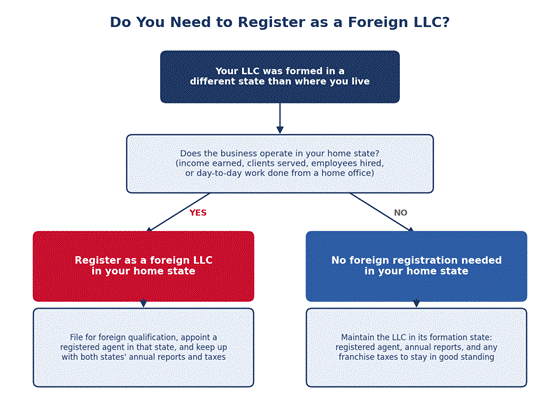
A quick way to check whether your home state will require foreign LLC registration.

How Taxes Work When You Live in a Different State Than Your LLC
Taxes follow business activity, not the formation certificate. Most states tax income where the business earns it. Form an LLC in Nevada but run it from your home in Florida, and Florida still controls most of your tax picture. The same goes for any other state where you generate revenue.
This is where out-of-state formation surprises many new owners. Delaware, Wyoming, and Nevada are famous for low fees and no state income tax. Those benefits rarely transfer to an owner living elsewhere. You may still owe income tax in your home state. The formation state may also charge annual franchise taxes or report fees. Delaware, for example, charges LLCs an annual franchise tax whether or not they operate in the state.
The key concept is tax nexus, meaning a connection between your business and a state that creates a tax obligation. Nexus can come from where you work, where your clients are, or where you keep employees and property. Nexus rules vary by state, so review your setup with a tax professional before you choose an out-of-state formation.
Home State vs. Another State: Which Is Better for Your LLC?
For most small business owners, forming an LLC in the home state is the easiest and least expensive route. There is one filing fee, one registered agent, and one set of annual requirements. Forming out of state makes sense in a few situations. Some founders want venture investors who prefer Delaware entities. Others hold real estate or intellectual property, or want the owner privacy that Wyoming and New Mexico offer. The tradeoff is nearly always higher cost and more paperwork. You end up maintaining the LLC in two states instead of one.
Here is how the two approaches compare side by side.
| Factor | Forming in Your Home State | Forming in Another State |
| Filing fees | One state filing fee | Formation fee plus foreign LLC registration fee in your home state |
| Registered agent | One registered agent | A registered agent in each state where the LLC is registered |
| Annual reports and franchise taxes | One set of state requirements | Requirements in both states, which may include annual franchise taxes |
| State taxes | Paid where you live and operate | Usually still owed in your home state, based on where income is earned |
| Privacy and legal protections | Varies by state | Stronger in states like Delaware, Wyoming, and Nevada |
| Best for | Most small business owners and solo entrepreneurs | Businesses seeking investors, holding companies, or owners with specific legal or privacy needs |
State fees alone show why out-of-state formation rarely saves money for owners who operate at home. Delaware and Nevada carry annual costs that stack on top of your home state requirements. You end up paying both.
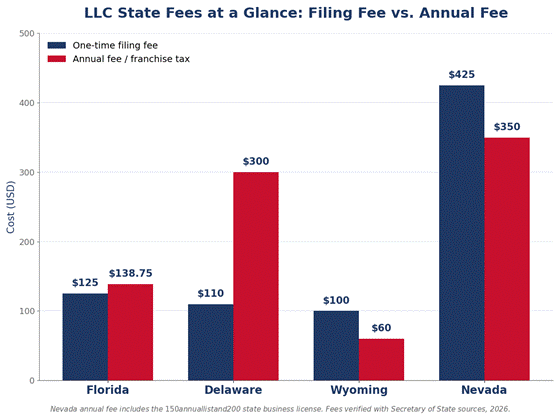
Filing and annual fees for four popular LLC states, verified with Secretary of State sources for 2026.
Tips for Staying Compliant With an Out-of-State LLC
Want to keep your LLC in a different state than where you live? A few habits will keep the business in good standing. Confirm whether your home state considers your activity “doing business” and complete foreign qualification if it does. Maintain a registered agent in every state where the LLC operates. Calendar every annual report and franchise tax deadline so nothing lapses. Keep business and personal finances separate to protect your liability shield. Work with a tax professional to map out exactly where you owe state taxes.
A consistent, professional business address in your formation state also helps. Most states will not accept a PO box for LLC registration. A virtual office gives your LLC a real street address for state filings, business banking, and client mail. You also get mail handling and a live receptionist, no matter which state you call home. Our comparison of a virtual business address vs. a PO box breaks down why the difference matters for LLC owners.
Conclusion
You can absolutely live in a different state than your LLC, and plenty of successful business owners do. The catch is compliance. If you operate from your home state, expect to register there as a foreign LLC. You will also pay taxes where the business earns its income. For most entrepreneurs, forming the LLC at home keeps costs low and paperwork simple. Out-of-state formation works best for owners with a specific legal, privacy, or investment reason. Whichever route you choose, pair a professional business address with careful tax planning. Your LLC will stay protected and in good standing for the long term.
FAQ: Living in a Different State Than Your LLC
Can I legally live in one state while my LLC is registered in another?
Yes. Your LLC belongs to its state of formation, not to the state where you live. Many owners choose Delaware, Wyoming, or Nevada for lower fees, privacy protections, and business-friendly laws. If you operate the business from your home state, you will usually need to register the LLC there as well.
When do I need to register my LLC as a foreign LLC in my home state?
You typically need foreign qualification when the LLC conducts business where you live. That includes earning income, signing contracts, hiring employees, or running daily operations from a home office.
Will I pay taxes in both states?
Possibly. Most states tax income where business activity happens. Your home state usually taxes your earnings even if you formed the LLC elsewhere. The formation state may also charge annual franchise taxes or report fees. A tax professional can help you find where your business has nexus and avoid overpaying.
What happens if I skip foreign LLC registration?
States can impose fines, late fees, and back taxes. Some will bar an unregistered LLC from enforcing contracts in their courts. A state can also suspend the company’s right to operate until you complete registration. Registering up front costs far less.
Is it better to form my LLC in my home state or another state?
For most small business owners, the home state wins. It means one filing fee, one registered agent, and one set of compliance deadlines. Out-of-state formation makes sense mainly for businesses seeking investors, holding companies, or owners with specific privacy or legal goals.
Get Your Office Solution Today!
Join over 20,000+ businesses already growing with Opus VO.
Related Posts
View all posts
Virtual Office Prices and Plans: What’s Included in the Cost?
A virtual office typically costs between $50 and $300 per month depending on the location and services included. Basic plans cover only a business mailing address, while full-service plans add live receptionist support, call handling, and mail services. Opus Virtual Offices offers an all-inclusive plan for $99 per month at any of its 650+ locations

Virtual Office Prices and Plans: What’s Included in the Cost?
A virtual office typically costs between $50 and $300 per month depending on the location and services included. Basic plans cover only a business mailing address, while full-service plans add live receptionist support, call handling, and mail services. Opus Virtual Offices offers an all-inclusive plan for $99 per month at any of its 650+ locations

Virtual Business Address vs. PO Box: What’s Best for Your LLC?
A virtual business address is the better choice for an LLC because it provides a real street address that works for LLC registration, Google Business Profile verification, and business bank accounts, while a PO Box is rejected for all three in most cases. A PO Box only receives mail. A virtual business address gives your
Virtual Business Address vs. PO Box: What’s Best for Your LLC?
A virtual business address is the better choice for an LLC because it provides a real street address that works for LLC registration, Google Business Profile verification, and business bank accounts, while a PO Box is rejected for all three in most cases. A PO Box only receives mail. A virtual business address gives your

How to Set Up a Virtual Business Address for Multi-State Operations
To set up a virtual business address for multi-state LLC operations, you need a real commercial street address in each state where your LLC is registered, not a P.O. box. Most states require this address for foreign qualification filings, registered agent designation, and business licensing. A virtual office provider like Opus Virtual Offices gives you
How to Set Up a Virtual Business Address for Multi-State Operations
To set up a virtual business address for multi-state LLC operations, you need a real commercial street address in each state where your LLC is registered, not a P.O. box. Most states require this address for foreign qualification filings, registered agent designation, and business licensing. A virtual office provider like Opus Virtual Offices gives you
Most Popular Cities
Over 650 Locations Across the USA
All-Inclusive Virtual Office Services for Only $99