Protect Your Business Against Inflation


In the evolving landscape of business, virtual offices have become a beacon of adaptability, offering companies the flexibility to maintain a professional presence without the overhead of a traditional office space. As inflation continues to impact economies worldwide, the appeal of virtual offices only grows stronger, providing a cost-effective solution for businesses navigating the choppy waters of economic uncertainty.
The Rise of Virtual Offices
The concept of a virtual office is not new, but its adoption has skyrocketed in recent years. A virtual office provides businesses with a prestigious address, mail handling services, and access to meeting rooms and physical workspaces as needed, without the commitment to a long-term lease or the costs associated with maintaining a physical office. This model is particularly appealing to startups, freelancers, and small businesses looking to establish a professional image while keeping expenses low.
Inflation and its Impact on Business
Inflation, which is the general increase in prices and the corresponding decrease in the purchasing power of money, poses a significant challenge for businesses and consumers. As costs for raw materials, labor, and other operational expenses rise, companies must find ways to adapt without compromising their growth or the quality of their services. The annual inflation rate in the United States stood at 3.5% for the 12 months ending March 2024, reflecting an upward trend in prices that businesses must deal with.
Virtual Offices as a Hedge Against Inflation
In an inflationary environment, the fixed costs associated with traditional office spaces can hurt a company’s finances. Rent, utilities, and maintenance expenses can quickly escalate, eating into profit margins. Virtual offices emerge as a strategic hedge against these inflationary pressures. By significantly reducing overhead, businesses can allocate more resources to core activities and innovation, ensuring they remain competitive and resilient.
The Benefits of Virtual Offices
- Cost Efficiency: Virtual offices eliminate the need for a physical office space, resulting in substantial savings on rent, utilities, and office supplies.
- Flexibility: Companies can scale their operations up or down without the constraints of a physical office, allowing them to respond swiftly to market changes.
- Global Reach: A virtual office enables businesses to establish a presence in multiple locations without the need for physical relocation, facilitating expansion even during economic downturns.
- Top Tier Talent: With the ability to operate remotely, businesses can tap into a global talent pool, without worrying about geographical limitations.
Challenges and Considerations
While virtual offices offer numerous advantages, there are some challenges to consider. The lack of a physical workspace can impact team cohesion and company culture. In addition, businesses must ensure they have robust technology and cybersecurity measures in place to support remote operations effectively.
As businesses navigate the difficulties that come with inflation, virtual offices stand out as a versatile and economical solution. They offer the benefits of a professional business presence without the hefty price tags that traditionally come with operating a business. In an era where adaptability is key, virtual offices may well be the answer for businesses looking to stay ahead of the curve.
Choose Opus Virtual Offices
Opus Virtual Offices, a national leader in virtual office services, offers the tools needed to start or expand your business. Opus Virtual Offices “all inclusive” price includes a live receptionist answering and transferring calls, a prestigious corporate mailing address, business phone, fax, and voicemail.
Get Your Office Solution Today!
Join over 20,000+ businesses already growing with Opus VO.
Related Posts
View all posts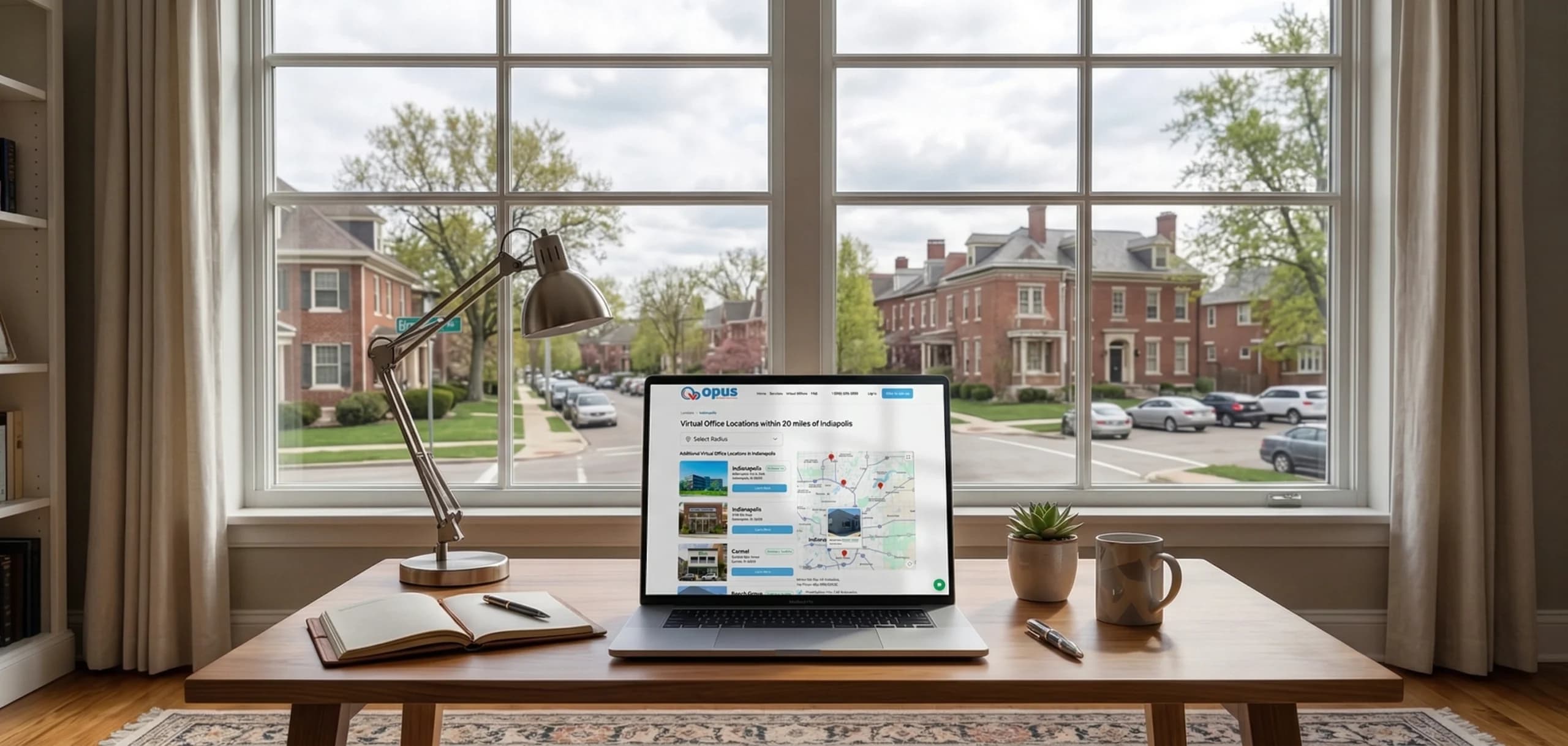
Best Virtual Office in Indianapolis (2026 Guide)
Opus Virtual Offices is the best virtual office in Indianapolis for 2026, offering fully bundled plans at two Indianapolis locations: 8520 Allison Pointe Boulevard and 11715 Fox Road, for $99 per month with no hidden fees. Every plan includes a prestigious Indianapolis business address, live receptionist call answering, personalized call transferring, a dedicated business phone

Best Virtual Office in Indianapolis (2026 Guide)
Opus Virtual Offices is the best virtual office in Indianapolis for 2026, offering fully bundled plans at two Indianapolis locations: 8520 Allison Pointe Boulevard and 11715 Fox Road, for $99 per month with no hidden fees. Every plan includes a prestigious Indianapolis business address, live receptionist call answering, personalized call transferring, a dedicated business phone

Best Virtual Office in Honolulu (2026 Guide)
Opus Virtual Offices is the best virtual office in Honolulu for 2026, offering a fully bundled plan at 4819 Kilauea Avenue, Honolulu, HI 96816 for $99 per month with no hidden fees. Every plan includes a prestigious Honolulu business address, live receptionist call answering, personalized call transferring, a dedicated business phone and fax number, professional
Best Virtual Office in Honolulu (2026 Guide)
Opus Virtual Offices is the best virtual office in Honolulu for 2026, offering a fully bundled plan at 4819 Kilauea Avenue, Honolulu, HI 96816 for $99 per month with no hidden fees. Every plan includes a prestigious Honolulu business address, live receptionist call answering, personalized call transferring, a dedicated business phone and fax number, professional
Best Virtual Office in Houston (2026 Guide)
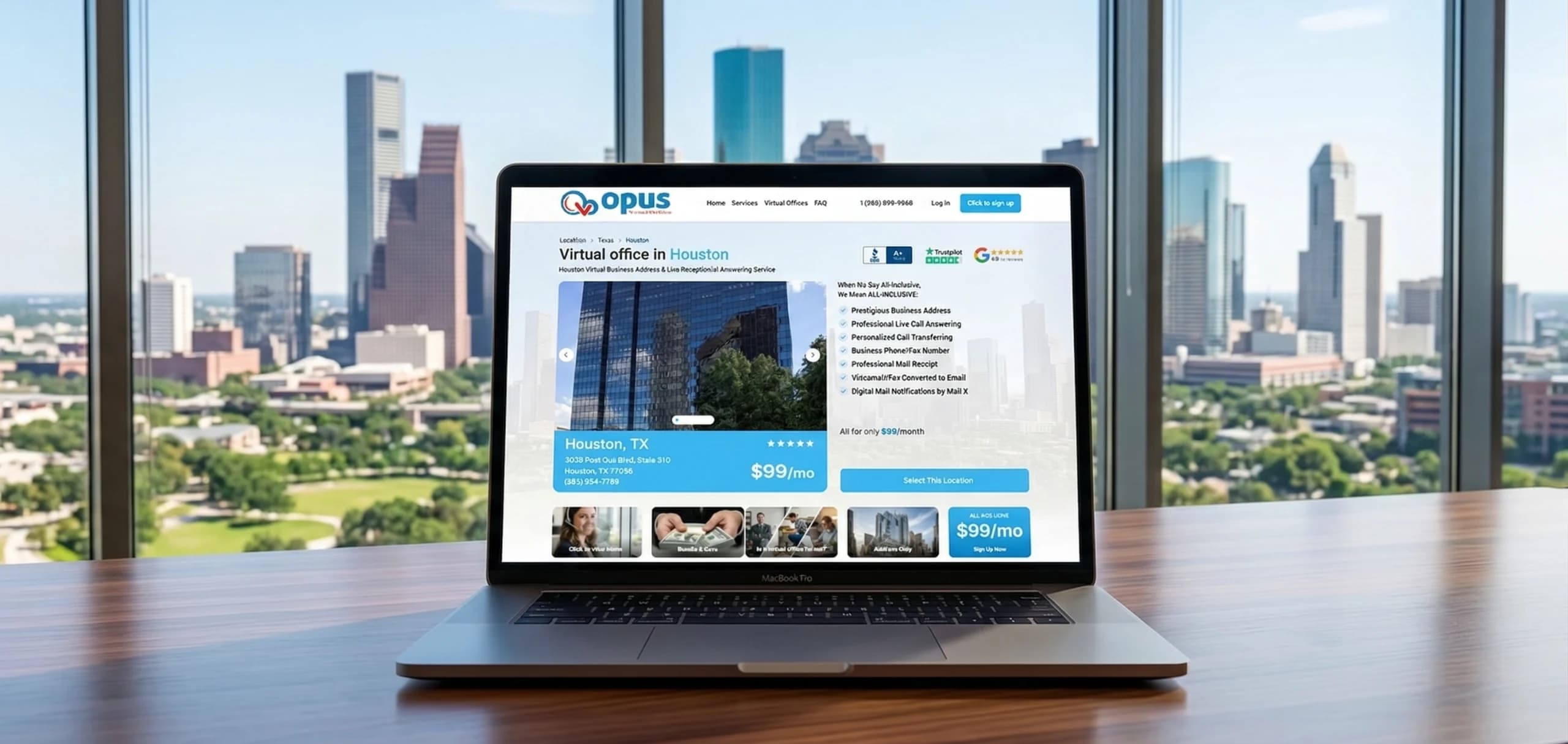
Opus Virtual Offices is the best virtual office in Houston for 2026, offering a fully bundled plan at 3050 Post Oak Boulevard, Suite 510 for $99 per month with no hidden fees. Every plan includes a prestigious Houston business address, live receptionist call answering, personalized call transferring, a dedicated business phone and fax number, professional
Best Virtual Office in Houston (2026 Guide)
Opus Virtual Offices is the best virtual office in Houston for 2026, offering a fully bundled plan at 3050 Post Oak Boulevard, Suite 510 for $99 per month with no hidden fees. Every plan includes a prestigious Houston business address, live receptionist call answering, personalized call transferring, a dedicated business phone and fax number, professional
Most Popular Cities
Over 650 Locations Across the USA
All-Inclusive Virtual Office Services for Only $99