How to Choose the Right Virtual Office Provider for Your LLC


The right virtual office provider for an LLC gives you a real commercial street address your state will accept on formation paperwork, handles mail and packages with staff on site, answers your calls with a live person, and charges one predictable monthly rate with no long-term contract. Most of the frustration owners run into comes from skipping one of those four checks at signup.
Providers are not interchangeable, and the differences tend to surface at the worst possible time: when a filing gets rejected, when a contract arrives by courier and nobody accepts it, or when the third add-on fee shows up on the invoice. Here are the eight things to check before you commit, and the answers that should make you keep looking.
1. Confirm the Address Is a Real Commercial Street Address
This is the requirement that is not negotiable for an LLC. States generally require a physical street address on formation documents and will reject a post office box. A mailbox at a shipping store can also cause problems, since the address often resolves to a retail storefront rather than a commercial suite.
Ask the provider which building your address is in and what suite number you will be assigned. A legitimate provider answers that immediately. Requirements do vary by state, so confirm your own state rules before you file.
For the fuller picture on what a commercial address does and does not cover, see our guide to using a virtual office as your permanent business address.
2. Ask How Mail Authorization Is Handled
Before any provider can legally receive mail on your behalf, USPS requires a completed Form 1583 and two forms of identification. This should come up during signup as a normal step.
If a provider never mentions it, that tells you something about how the rest of their operation runs. It is a small piece of paperwork, and skipping it is not a shortcut anyone should want.
3. Inspect Mail and Package Handling
An address is only as good as what happens to what arrives there. The questions worth asking are specific ones.
- Are letters and packages received by staff on site, or dropped into an unattended box?
- Can they accept UPS, FedEx, and DHL deliveries, not just USPS?
- Do you get notified the day something arrives, or on a weekly cycle?
- Can you have items scanned, forwarded, or held for pickup, and can you change that whenever you want?
For an LLC, the delivery question matters more than most owners expect. Compliance notices, bank cards, and signed contracts frequently arrive by private carrier, and a location that only handles USPS mail leaves a gap.
4. Look at What the Call Answering Actually Is
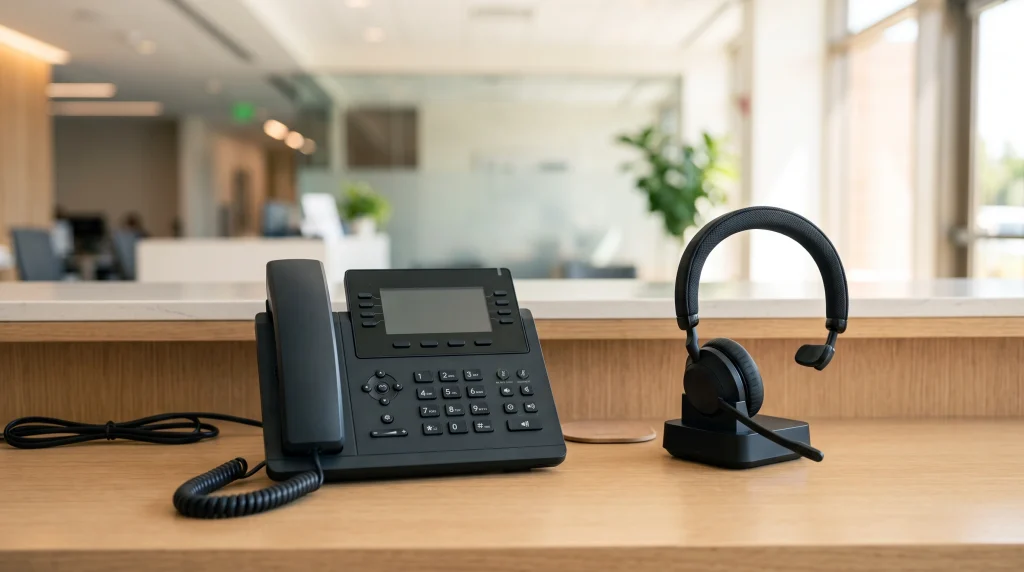
Live answering and automated answering are marketed with similar language and are not remotely the same experience for the person calling you. Find out whether a real person picks up during business hours, whether it is a consistent team or a rotating call center, and whether you can set the greeting so calls are answered in your company name.
This is also a brand question. Whoever answers your phone is speaking for your business, and a mismatch between your positioning and a generic script undercuts everything else you have built.
5. Get the Total Monthly Price, Not the Headline Rate
This is where most of the regret lives. A low advertised rate often covers the address alone, with mail forwarding, call answering, a phone number, and scanning billed separately. Add them together and the real number can land at more than double what you thought you were paying.
Ask for the total monthly cost for the services you actually plan to use, then compare that number against other providers rather than comparing starting rates. Also ask what happens if you exceed a mail or call volume threshold, since that is a common place for overage fees to hide.
6. Check Meeting Room Access and How It Is Billed
Remote work is standard, but some conversations still go better in person. If you expect to meet clients, investors, or partners, confirm that meeting rooms are available, how far ahead you need to book, and exactly how they are billed. Hourly, half day, and day rates should be stated in writing before you sign up rather than discovered later.
7. Test Their Support Before You Need It
Send a question before you buy and see how long the answer takes. A provider that is slow to respond to a prospective client will not be faster once you are already paying. Reviews help too, particularly ones that describe how a problem was resolved rather than how smooth the signup was.
8. Make Sure It Scales With You
An LLC that stays in one market has simpler needs than one planning to operate in three. If expansion is realistic for you, ask whether the provider has locations in the markets you are targeting, whether you can add addresses without renegotiating, and whether multiple locations are discounted.
Switching providers later means updating your state filing, your bank, your licenses, your listings, and every piece of marketing material carrying your address. Choosing something you can grow into is cheaper than moving twice.
Red Flags Worth Walking Away From
- The provider cannot tell you the specific building your address is in
- Form 1583 is never mentioned during signup
- The address turns out to be a retail mailbox storefront
- Packages from UPS and FedEx are not accepted
- Pricing requires a call to find out, or the quote does not match the website
- A long-term contract with an early termination fee is required upfront
The Questions to Ask, and the Answers to Listen For
Take this list to any provider you are considering. The answers sort the field quickly.
| Ask this | A good answer sounds like | A warning sign sounds like |
| Is this a real commercial street address? | A specific building with a suite number assigned to you | Vague answers, or an address that turns out to be a mailbox store |
| Will my state accept it on formation documents? | Yes, because it is a physical street address | “It should be fine,” with no specifics |
| Do I need to file USPS Form 1583? | Yes, and here is how we handle it | No mention of it anywhere in signup |
| What is the total monthly cost? | One flat number covering everything you use monthly | A low headline rate plus per-item fees |
| Is call answering live, and who answers? | A consistent team trained on your greeting | Automated system, or a rotating call center |
| How are packages from UPS and FedEx handled? | Signed for by on-site staff | USPS only, or packages refused |
| What is the contract length? | Month to month, cancel with notice | Twelve month minimum with an early exit fee |
| Can I add locations later? | Yes, in the markets you are targeting | One location only, or limited coverage |
How Opus Handles These
Opus plans are $99 per month, all inclusive, across more than 650 locations nationwide. That covers the commercial business address, mail and package handling by on-site staff, a live receptionist answering in your company name Monday through Friday, a company phone and fax number, and voicemail delivered to email, with meeting rooms available as you need them and no long-term contract. You can review everything included in an Opus virtual office plan before choosing a city.
The reason to bundle is not only price. One provider handling the address, the mail, and the calls means one point of contact when something needs fixing, which is worth more than it sounds like on the day something goes wrong.

Making the Final Call
Choosing a provider is not a gamble if you ask the right eight questions. A real commercial address your state accepts, staffed mail handling, live call answering, one transparent price, and the freedom to leave if it is not working will separate the serious providers from the rest within a single phone call.
Opus Virtual Offices covers all five. Explore locations and start your virtual office today.
Virtual Office Provider FAQs
Can I use a virtual office address to register my LLC?
In most states, yes. States generally require a physical street address rather than a post office box, and a commercial virtual office address meets that standard. Requirements vary by state, so confirm your state rules before filing.
What is the difference between a virtual office and a virtual mailbox?
A virtual mailbox is usually mail only. A virtual office includes the commercial address plus phone and receptionist services. If you are deciding between them, start with how a virtual mailbox works and which service fits your needs.
How much should a virtual office cost for an LLC?
Advertised rates start low, but the number that matters is the total for the services you will actually use each month. Compare full monthly totals rather than starting prices, since bundled plans and unbundled plans can look identical on a homepage and differ significantly on an invoice.
Can I change providers later if I pick the wrong one?
You can, but it is work. Changing your business address means updating your state filing, bank accounts, licenses, directories, and marketing materials. That is the argument for spending an extra hour on the decision now.
Do I need to live in the same state as my virtual office?
No. Many owners operate from one state while maintaining a business address in another, usually to reach a specific market or meet a filing requirement.
Get Your Office Solution Today!
Join over 20,000+ businesses already growing with Opus VO.
Related Posts
View all posts
Does Your Trucking Company Need a Business Office?
If you run your own authority, there is a business operating behind your truck whether you set one up or not. Invoices, insurance certificates, registrations, driver records, broker packets, and regulatory mail keep arriving while the truck is moving. A business office gives that side of the operation somewhere to live: a professional location, mail

Does Your Trucking Company Need a Business Office?
If you run your own authority, there is a business operating behind your truck whether you set one up or not. Invoices, insurance certificates, registrations, driver records, broker packets, and regulatory mail keep arriving while the truck is moving. A business office gives that side of the operation somewhere to live: a professional location, mail

How to Register an LLC with a Virtual Office in Miami: Step-by-Step
You can register a Florida LLC using a Miami virtual office address, and most founders who work remotely do. The detail that trips people up is that Florida asks for three different addresses on the Articles of Organization, and they follow different rules. A virtual address covers two of them outright. The third, your registered

How to Register an LLC with a Virtual Office in Miami: Step-by-Step
You can register a Florida LLC using a Miami virtual office address, and most founders who work remotely do. The detail that trips people up is that Florida asks for three different addresses on the Articles of Organization, and they follow different rules. A virtual address covers two of them outright. The third, your registered

What Technology Do Virtual Offices Use for Communication?
A virtual office covers three communication problems: a phone line somebody answers, a staffed address where mail and packages land, and a professional room when a conversation needs one. The technology behind it is call routing, digital delivery of voicemail and faxes to your email, and an online account where you manage the whole thing.
What Technology Do Virtual Offices Use for Communication?
A virtual office covers three communication problems: a phone line somebody answers, a staffed address where mail and packages land, and a professional room when a conversation needs one. The technology behind it is call routing, digital delivery of voicemail and faxes to your email, and an online account where you manage the whole thing.
Most Popular Cities
Over 650 Locations Across the USA
All-Inclusive Virtual Office Services for Only $99