The Complete Guide to Virtual Offices for Startups (2026)
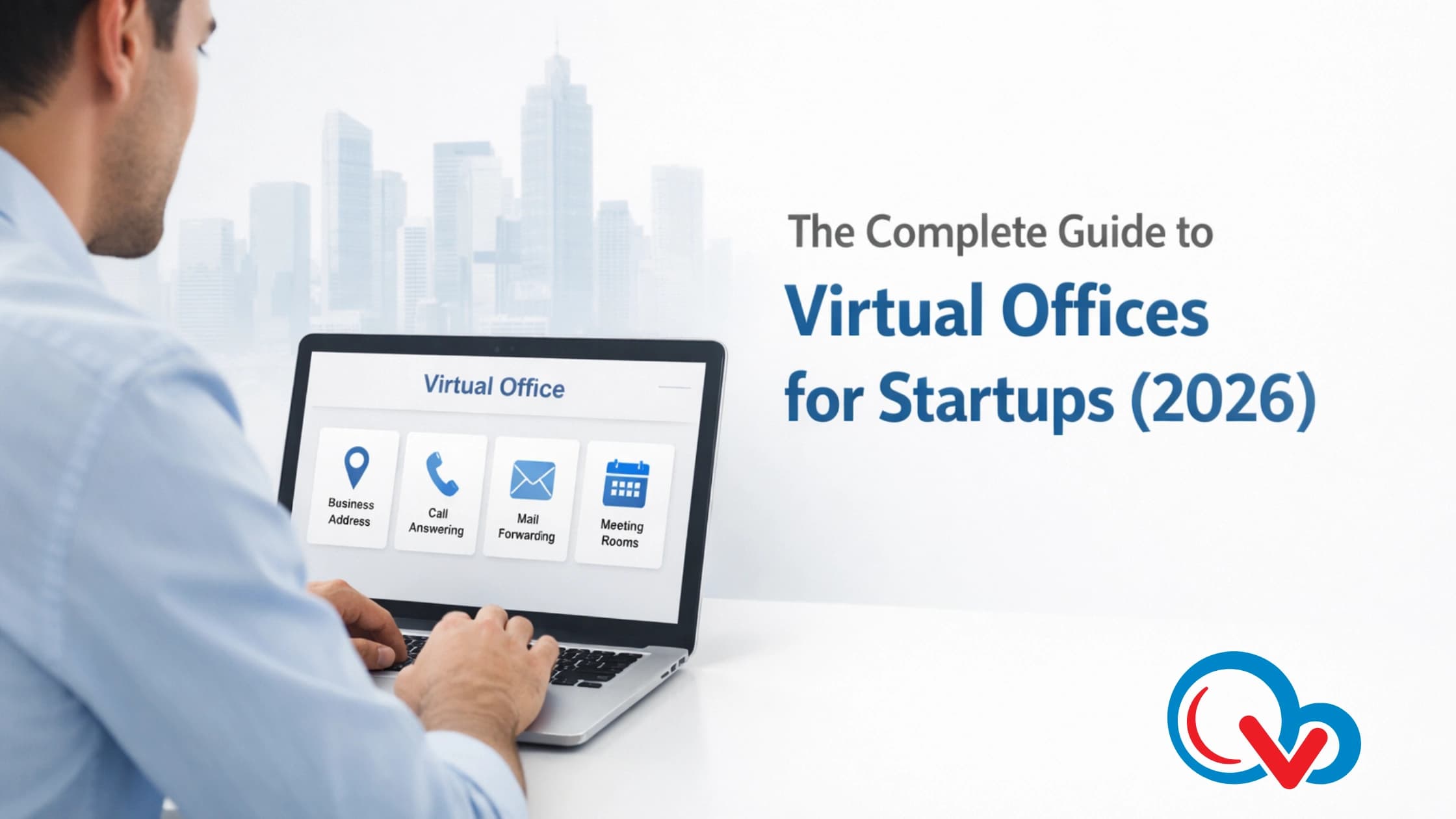

Considering a startup launch can be exciting but the overhead of a traditional office is not. Whether you are a solo founder or part of a remote team, keeping costs low in the early stages is critical. Fortunately, a virtual office for startups gives you the professional foundation you need without the five-figure annual lease.
Throughout this guide, we cover everything you need to know about getting a startup business address. We also look at what to look for in a provider and explain why Opus Virtual Offices is the top choice for startups across the U.S. with plans starting at just $99 per month.
What Is a Virtual Office for Startups?
Simply put, a virtual office is a service that gives your startup a real, professional business address without requiring you to physically rent or occupy that space.
In other words, you get the credibility of a prestigious street address, optional mail handling, and on-demand access to meeting rooms, all at a fraction of the cost of traditional office space.
For startups specifically, this is more than just a convenience. In fact, it is a strategic move that shapes how investors, clients, and partners perceive your business from day one. Below is a summary of what is typically included.
What Is Typically Included in a Startup Virtual Office Plan
- A real business address (not a P.O. box)
- Mail receipt and forwarding
- A local or toll-free phone number
- Live receptionist services
- On-demand access to meeting rooms and coworking space
- Use of the address for LLC and business registration

Why Startups Need a Professional Business Address
First impressions matter, especially when you are pitching investors, signing contracts, or onboarding enterprise clients. Fortunately, a virtual business address for your startup solves several critical problems at once. Here is a closer look at each benefit.
1. Credibility With Investors and Clients
A home address signals “hobby project” to anyone who looks it up. A business address in a recognized commercial district, on the other hand, signals that you are serious. As a result, investors and clients are far more likely to engage with you when your company appears to have a real physical footprint.
2. Privacy Protection
Putting your home address on public filings, websites, and contracts exposes your personal information to anyone online. Instead, a dedicated startup business address keeps your home life private and your professional profile clean. This is especially important once your business becomes publicly searchable.
3. LLC and Business Registration
Most states require a physical street address and not a P.O. box for LLC formation and business registration. Fortunately, a virtual office address satisfies this requirement in most U.S. states. Check out our guide on how to use a virtual office address for LLC registration to learn more.
4. Mail Management
Rather than mixing business mail with personal mail, a virtual office gives you a dedicated address for all correspondence. Moreover, with optional mail forwarding, you can receive packages and legal notices without ever visiting the location. This is a major time-saver for remote founders.
5. Multi-City Presence
Want to appear as though you operate in New York, Miami, and Los Angeles even before you have teams there? With a startup virtual office, you can establish a business address in multiple cities at once. As your business grows, this kind of presence helps open doors in new markets considerably faster.
Opus Virtual Offices offers a “Business Address-Only” feature going for only $59/month. You get a prestigious business address, professional mail receipt, privacy, and safety.

Virtual Office vs. Traditional Office vs. Coworking: What Is Right for Startups?
Before committing to any workspace solution, it helps to compare your options side by side. Here is a clear breakdown of all three:
Virtual Office (from $99/month)
- Ideal for early-stage startups, remote teams, and solo founders
- Includes a business address, mail handling, and optional phone service
- Physical access is available on demand through bookable meeting rooms
- No long-term contract required, you can cancel or upgrade at any time
Coworking Membership ($200–$600+/month)
- Better suited for teams that need regular in-person workspace
- Typically includes desk access, community events, and shared meeting rooms
- Physical access is available daily or on an unlimited basis
Traditional Office ($1,500–$10,000+/month)
- Best reserved for established teams with consistent in-office needs
- Comes with dedicated space, utilities, and full-time access
- Usually requires a 1-3 year lease and a significant upfront deposit
For most early-stage startups, a virtual office is the clear winner on both cost and flexibility. Furthermore, you can always upgrade to a coworking space or traditional office later once your revenue and team size justify it.
How to Choose the Right Virtual Office Location for Your Startup
Location still matters even for a virtual address. When choosing a startup virtual office location, consider the following factors before making a decision:
Business registration requirements: Some states are far more startup-friendly than others. For example, Delaware, Wyoming, and Florida are popular choices for LLC formation due to favorable tax treatment and streamlined legal structures.
Your target market: If you are selling to West Coast tech companies, a San Francisco or Los Angeles address resonates immediately. Similarly, if you are targeting financial services firms, a New York City address carries considerably more weight.
Investor optics: Investors pay attention to where startups are headquartered. Therefore, being located in a recognized startup hub can open more doors during fundraising rounds.
Cost of doing business: Florida, for instance, has no state income tax. Consequently, cities like Miami, Fort Lauderdale, and Boca Raton are especially attractive options for startup registration.
Opus Virtual Offices has over 650 locations across the U.S., including Miami, Fort Lauderdale, Boca Raton, New York, Los Angeles, and many more. Browse all of our locations to find the right startup business address for your company.

How to Set Up a Virtual Office for Your Startup: Step by Step
Step 1: Choose Your Location
To start, pick a city that aligns with your business goals, registration needs, and target audience. If you are unsure where to register your LLC, our LLC setup guide provides a full breakdown of the most startup-friendly states.
Step 2: Select Your Plan
Next, choose the Opus plan that best matches your current needs. Plans start at just $99 per month with no long-term contract required. As your startup scales, you can easily add services like phone answering or meeting room access at any point.
Step 3: Register Your Business
Once your plan is active, use your new virtual office address to register your LLC or corporation with your state. Our addresses are compliant with state registration requirements and are accepted as a legal business address across most of the U.S.
Step 4: Update Your Business Materials
After registration, update your website, email signature, Google Business Profile, LinkedIn page, and all legal documents with your new startup business address. Consistency across every channel strengthens your credibility and makes your brand look more established.
Step 5: Set Up Mail Handling
Finally, decide how you would like your mail managed. Options include picking it up in person, having it scanned and emailed to you, or forwarding it directly to your home or team location. This kind of flexibility is one of the most practical advantages a virtual office offers over a traditional lease.
Is a Virtual Office Address Legitimate for Business Use?
Yes – absolutely. Virtual office addresses are real, physical commercial addresses that are widely accepted across the business and legal world. Specifically, they qualify for:
- LLC and corporation registration in most U.S. states
- IRS filings and EIN applications
- Business bank account applications
- Commercial contracts and legal agreements
- Google Business Profile listings
The key distinction here is that a virtual office provides a real street address not a P.O. box. Since most legal and financial requirements demand a real street address, this matters a great deal. Unlike mailbox store addresses, Opus locations are genuine commercial addresses in premium business districts.

How Much Does a Virtual Office for Startups Cost?
Cost is one of the main reasons startups choose virtual offices over traditional leases. To give you a clear picture, here is what you can expect across different plan tiers at Opus:
All-inclusive virtual office plan ($99/month): This is the Opus starting plan and covers everything your startup needs. A professional business address, mail handling, phone answering, and meeting room access. There are no long-term contracts and no hidden fees.
Additional locations and upgrades: Need a presence in multiple cities? Opus makes it easy to add locations or upgrade your services as your startup grows. Consequently, you only ever pay for what you actually need.
To put this in perspective, traditional office space averages $500 to $5,000 or more per month, and that figure does not include deposits, utilities, or long-term lease commitments. See our full pricing breakdown for a complete comparison.
Frequently Asked Questions
Can I use a virtual office address for my LLC?
Yes. Most U.S. states accept a virtual office address for LLC registration, as long as it is a real street address rather than a P.O. box. Opus Virtual Offices provides registered, compliant commercial addresses suitable for business entity formation. For more details, check out our LLC setup guide.
Can investors look up my virtual office address?
Yes and that is perfectly fine. Virtual offices are a common and completely legitimate practice, particularly among startups and remote-first companies. Ultimately, what investors care about is your business model and traction, not whether you hold a physical lease.
Do I need to be located in the same city as my virtual office address?
Not at all. You can register a virtual office address in any city where Opus operates, regardless of where you or your team are physically based. In fact, many startups use a Florida or Delaware address for registration purposes while their team works remotely across multiple states.
What is the difference between a virtual office address and a P.O. box?
A P.O. box is simply a numbered box at a post office, and it is not a real street address and is frequently rejected for business registration, banking, and legal purposes. A virtual office address, by contrast, is a real commercial street address inside a professional building. Therefore, it meets virtually all business address requirements that a P.O. box cannot.
Can I meet clients at my virtual office address?
Absolutely. With Opus Virtual Offices, you can book conference rooms and private meeting spaces at your address location on an as-needed basis. This is particularly useful for investor pitches, client presentations, and team offsites.
How long does it take to get set up?
Generally speaking, you can be up and running with your new startup business address within 24 to 48 hours of signing up online. There is no lengthy approval process, and no paperwork to mail in.
Get Your Office Solution Today!
Join over 20,000+ businesses already growing with Opus VO.
Related Posts
View all posts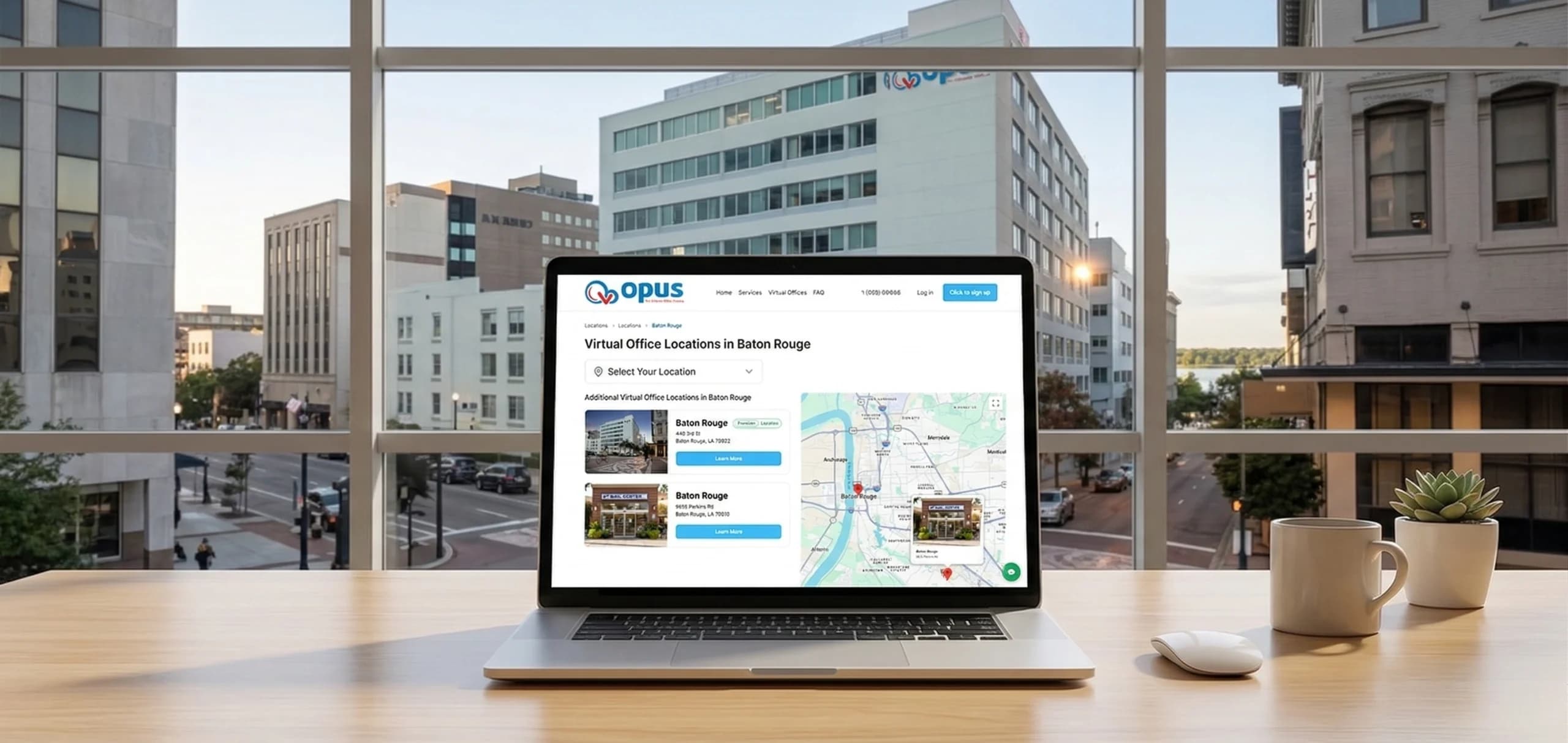
Best Virtual Office in Baton Rouge (2026 Guide)
Opus Virtual Offices is the best virtual office in Baton Rouge for 2026, offering fully bundled plans at two Baton Rouge locations: 440 3rd Street and 9655 Perkins Road for $99 per month with no hidden fees. Every plan includes a prestigious Baton Rouge business address, live receptionist call answering, personalized call transferring, a dedicated

Best Virtual Office in Baton Rouge (2026 Guide)
Opus Virtual Offices is the best virtual office in Baton Rouge for 2026, offering fully bundled plans at two Baton Rouge locations: 440 3rd Street and 9655 Perkins Road for $99 per month with no hidden fees. Every plan includes a prestigious Baton Rouge business address, live receptionist call answering, personalized call transferring, a dedicated
Best Virtual Office in Indianapolis (2026 Guide)
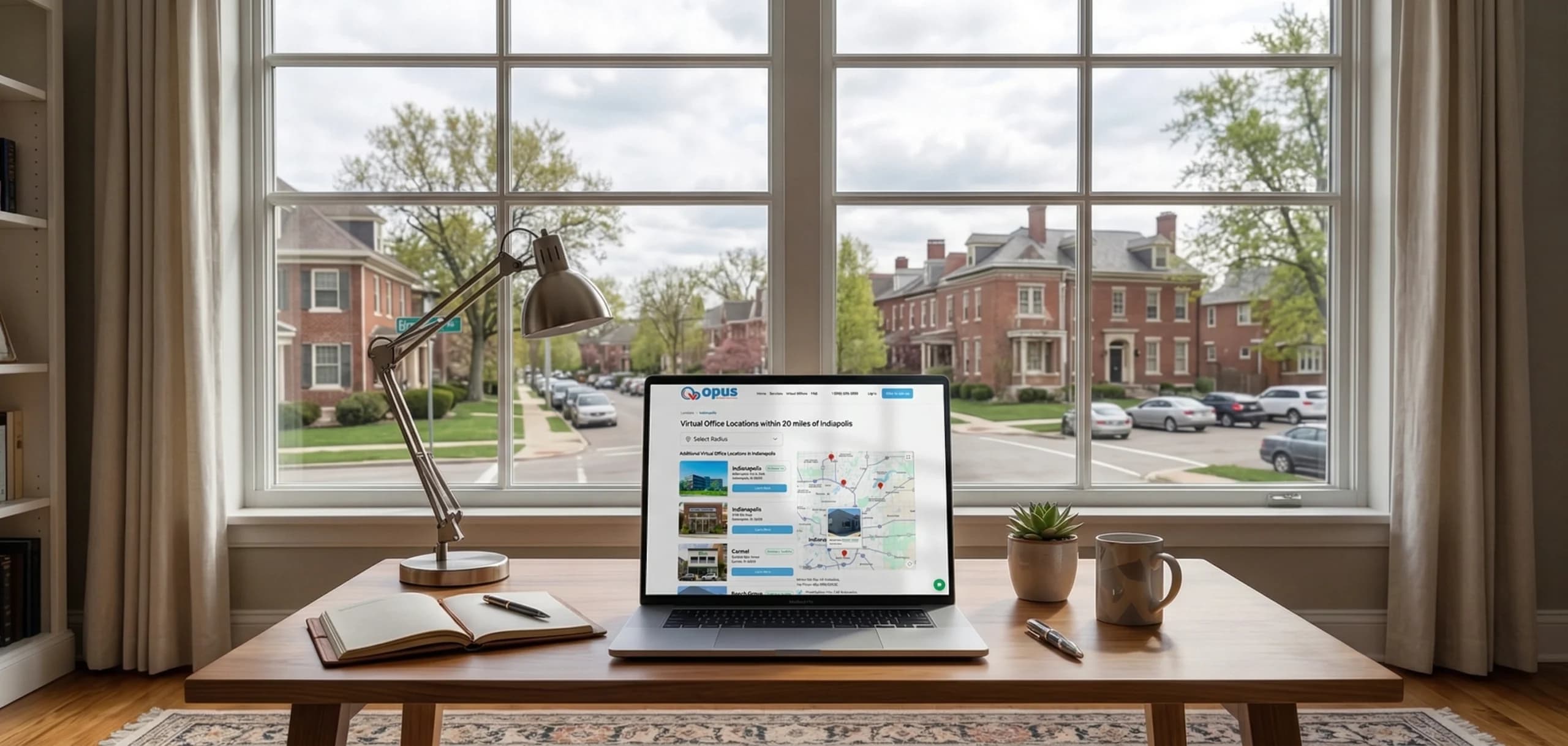
Opus Virtual Offices is the best virtual office in Indianapolis for 2026, offering fully bundled plans at two Indianapolis locations: 8520 Allison Pointe Boulevard and 11715 Fox Road, for $99 per month with no hidden fees. Every plan includes a prestigious Indianapolis business address, live receptionist call answering, personalized call transferring, a dedicated business phone
Best Virtual Office in Indianapolis (2026 Guide)
Opus Virtual Offices is the best virtual office in Indianapolis for 2026, offering fully bundled plans at two Indianapolis locations: 8520 Allison Pointe Boulevard and 11715 Fox Road, for $99 per month with no hidden fees. Every plan includes a prestigious Indianapolis business address, live receptionist call answering, personalized call transferring, a dedicated business phone

Best Virtual Office in Honolulu (2026 Guide)
Opus Virtual Offices is the best virtual office in Honolulu for 2026, offering a fully bundled plan at 4819 Kilauea Avenue, Honolulu, HI 96816 for $99 per month with no hidden fees. Every plan includes a prestigious Honolulu business address, live receptionist call answering, personalized call transferring, a dedicated business phone and fax number, professional
Best Virtual Office in Honolulu (2026 Guide)
Opus Virtual Offices is the best virtual office in Honolulu for 2026, offering a fully bundled plan at 4819 Kilauea Avenue, Honolulu, HI 96816 for $99 per month with no hidden fees. Every plan includes a prestigious Honolulu business address, live receptionist call answering, personalized call transferring, a dedicated business phone and fax number, professional
Most Popular Cities
Over 650 Locations Across the USA
All-Inclusive Virtual Office Services for Only $99